

NETI Workshop
April 8-10, 2026 at the University of Tennessee
The National Effective Teaching Institute (NETI) is one of the most widely recognized and respected faculty development programs in the U.S. Since its inception in 1991, NETI workshops have drawn more than 2,800 participants from over 365 universities.
The workshop has received stellar reviews and surveys of past participants show that NETI has successfully motivated them to adopt or increase their use of teaching practices known to correlate with improved student learning and made participants more reflective and student-centered in their teaching practice.

Purpose
To provide participants information and hands-on practice in the elements of effective teaching, enhance teaching skills by introducing research-based best practices, and provide participants with opportunities for networking with other faculty who share an interest in effective teaching.
NETI Workshop Chairs

Assistant Dean for Curriculum Strategic Initiatives,
College of Emerging and Collaborative Studies

Teaching Associate Professor,
College of Emerging and Collaborative Studies
NETI Workshop Facilitators
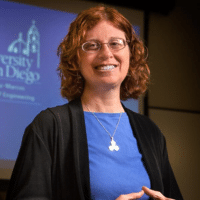
Susan M. Lord
Dr. Lord joined the University of San Diego faculty in 1997 and has served in multiple leadership roles, including Chair of the Electrical Engineering Department and Chair of the Integrated Engineering program. Her teaching and NSF-funded research focus on inclusive and innovative engineering education, with particular attention to student pathways, Latinos, and military veterans. A fellow of IEEE and ASEE, she has received numerous honors—including the 2018 IEEE Undergraduate Teaching Award—and is co-author of The Borderlands of Education: Latinas in Engineering.

Matthew W. Ohland
Dr. Ohland is the Dale and Suzi Gallagher Professor of Engineering Education at Purdue University and a Fellow of ASEE, IEEE, and AAAS. His nationally recognized research on engineering student success has earned multiple best-paper awards from the Journal of Engineering Education and IEEE Transactions on Education, and his CATME Team Tools have been used by more than 1.5 million students worldwide. A longtime leader in engineering education, he has delivered extensive student seminars and faculty development workshops and has served in key roles with Tau Beta Pi, ABET, and IEEE.

Michael J. Prince
Dr. Prince is a Professor of Chemical Engineering at Bucknell University and co-Director of the National Effective Teaching Institute and How to Engineer Engineering Education, two nationally recognized faculty development programs. His research focuses on student-centered instruction, conceptual change, and faculty adoption of evidence-based teaching practices, and he has led roughly 150 faculty development workshops worldwide. A Fellow of ASEE, he has received multiple teaching honors, including Bucknell’s Lindback Award for Distinguished Teaching and the Hutchison Medal from the Institution of Chemical Engineers.

Thomas Merrick
Thomas Merrick is a visionary educator and technology pioneer with a passion for transforming learning through immersive experiences. Holding a BS in Information Engineering from Cornell and an MA in Independent School Leadership from Columbia, he has over 25 years of experience in education as a Math Director, School Administrator, and technologist.
At Stanford University’s Distinguished Career Institute, Tom discovered the potential of Virtual Reality to revolutionize education. He taught VR courses at Stanford’s Virtual Human Interaction Lab and later continued with Stanford Continuing Education. Now at the University of Miami, he serves as Senior Project Manager of XR Initiatives and adjunct lecturer, spearheading projects like UMverse, a groundbreaking virtual reality education platform, and Miami XR 2025 Conference.
Thomas’s innovative work empowers students and faculty to harness AI and XR technologies for creative, interdisciplinary learning, solidifying his role in shaping the future of education.
Objectives
Increase student motivation.
Write beneficial learning outcomes.
Enhance motivation and understanding.
Promote an inclusive environment.
Design active learning strategies to engage students.
Foster conditions for higher-level thinking skills.
Address common early academic challenges.
Utilize diagnostic, formative, and summative assessments.
Schedule
Day 1: 8:10 am–5:00 pm
- 8:10–8:40 am – Workshop preview and introductions
- 8:40–9:40 am – Motivating students and student learning
- 9:40–9:55 am – Break
- 9:55–10:45 am – Motivating students and student learning (continued)
- 10:55–11:30 am – Writing and use of learning objectives to guide:
- Course Planning
- Instructional Design
- Assessment of Learning
- 11:30–12:15 pm – Lunch, not provided
- 12:15–1:15 pm – Writing and use of learning objectives to guide (continued)
- 1:15–2:45 pm – 30 Min MIRO activity, 60 Min VR and education
- 2:45–3:00 pm – Break
- 3:00–5:00 pm – Active learning techniques: Ways to engage students that increase learning while minimizing student resistance, even in large classes
Day 2 10:20 am–2:50 pm (repeated 8:10–10:10 am; 3:00–4:30 pm)
- 8:10-10:10 am – Repeat: Active learning techniques: Ways to engage students that increase learning while minimizing student resistance, even in large classes
- 10:10–10:20 am – Break
- 10:20-11:50 am – Engaging all students
- 11:50–12:50 pm – Lunch, not provided
- 12:50-2:50 pm – Using inductive teaching methods to promote conceptual understanding
- Inquiry-based learning
- Problem-based learning
- 2:50–3:00 pm Break
- 3:00-4:30 pm – Repeat: 30Min MIRO activity, 60 Min VR and education
Day 3 10:25 am–4:30 pm (repeated 8:10–10:10 am)
- 8:10–10:10 am Repeat: Using inductive teaching methods to promote conceptual understanding
- Inquiry-based learning
- Problem-based learning
- 10:10-10:25 am – Break
- 10:25–11:55 am – Team Formation and management
- 11:55–12:55 pm – Lunch, not provided
- 12:55–3:00 pm – Assessment of learning:
- Diagnostic, formative, and summative assessment including tests that are challenging but fair
- 3:00–4:20 pm – Course planning exercise using workshop materials to redesign more engaging and effective courses
- 4:20–4:30 pm – Wrap up

Register
DATE: April 8-10, 2026
Location: University of Tennessee
72 Available Seats*
Estimated Cost: $500 per seat
*Priority given in order of response

Testimonials
“After decades in Industry, I have accepted a professor of practice teaching position in engineering at UT. As I am new to teaching, and quite worried about the daunting tasks of a new department, a new major and concentration, I was looking for everything I could to jump start me into Year 1. At the advice of the department head, I signed up for NETI-1 at Virginia over the summer before I started my assignment and it was an amazing experience. I learned so much, I am so energized. The teaching methods of active learning, inclusive teaching, and a variety of assessment types and classroom engagement sessions have given me so much to include. I have already received lots of positive feedback from students. I look forward to taking the next class NETI2 student engagement when it offered. This was a great experience, thank you to the facilitators and team.”
– Brian LaRose, Assistant Professor of Practice, Department of Applied Engineering
I had the opportunity to attend the NETI (National Effective Teaching Institute) Workshop held in June 2025 at Virginia University. It was an outstanding professional development experience that significantly enhanced my understanding of effective teaching practices. The sessions were well organized, engaging, and highly practical, providing valuable strategies that I could immediately apply in my own teaching. The facilitators were knowledgeable and supportive, creating an environment that encouraged meaningful discussion and collaboration among participants. Overall, the workshop was extremely beneficial, and I highly recommend NETI to anyone looking to strengthen their teaching skills and pedagogical approach—especially new faculty like me.
I sincerely thank my faculty mentor, Dr. Eric Lukosi, our department head, Dr. Brian Wirth, and the College for supporting my participation in this workshop.
– Kondapa Naidu Bobba, Assistant Professor, Department of Nuclear Engineering